


Is a furnace tune-up worth it? For most gas furnaces, yes. The payoff comes from safety checks and avoiding breakdowns, not major fuel savings. A visit typically costs about $70 to $250 in Canada, and early fall is the best time to book.
Typical cost
$70 to $250
One-time visit, per HomeStars
Best timing
Early fall
Before the heating season, per HRAI
How often
Once a year
At least annually, per Enbridge Gas
Three things decide whether a tune-up pays off in your home:
- Safety: whether a technician tests carbon monoxide, gas pressure and the heat exchanger.
- Reliability: whether worn parts get caught in October instead of January.
- Paperwork: whether your warranty or a future buyer expects a dated service record.
This guide covers what a real tune-up measures, how to spot a rushed one, and when a repair or replacement makes more sense. It covers gas furnaces only. If you already know you want service, see our furnace tune-ups in Burlington page or our furnace maintenance in Hamilton page.
In this article
- Worth it for most Ontario homes?
- What a furnace tune-up should measure
- How to tell a real tune-up from a quick look
- How often to book
- High-efficiency furnaces
- Carbon monoxide safety
- Warranty and resale
- When a tune-up is not the right fix
- What a tune-up costs and what you can do yourself
- Booking a furnace tune-up in Hamilton, Burlington or Brantford
- Sources
Is a Furnace Tune-Up Worth It for Most Ontario Homes?
Yes, if your furnace burns gas and you want it to run safely through a Southern Ontario winter. Enbridge Gas advises a certified heating contractor to inspect gas appliances at least once a year. The Heating, Refrigeration and Air Conditioning Institute of Canada (HRAI) also recommends a yearly service in the fall.
Is a furnace tune-up necessary, or just nice to have? For gas furnaces it leans toward necessary. The checks that matter most, combustion and carbon monoxide, are the ones you cannot see.
The fuel savings argument is weaker than most ads suggest. A furnace’s efficiency rating comes from its design, so cleaning mainly restores performance lost to dust and drift. Treat any promise of a fixed percentage saving with caution.
The stronger argument is timing. Worn ignitors and dirty flame sensors often show up during a fall visit, and they cause many no-heat calls in the coldest weeks. Here is how the answer shifts with your situation:
| Your situation | Worth it? | What the visit should focus on |
|---|---|---|
| Furnace under 5 years old | Yes, a lighter visit | Filter, condensate drain, venting and safety controls. |
| 5 to 15 years old, serviced yearly | Yes | Ignition parts, blower and airflow readings. |
| Never serviced, any age | Yes, book soon | A full inspection that sets a written baseline. |
| 15 years or older | Yes, for safety | Heat exchanger, carbon monoxide readings and replacement planning. |
| Warranty asks for service proof | Yes | A dated written report you can file. |
What a Furnace Tune-Up Should Measure
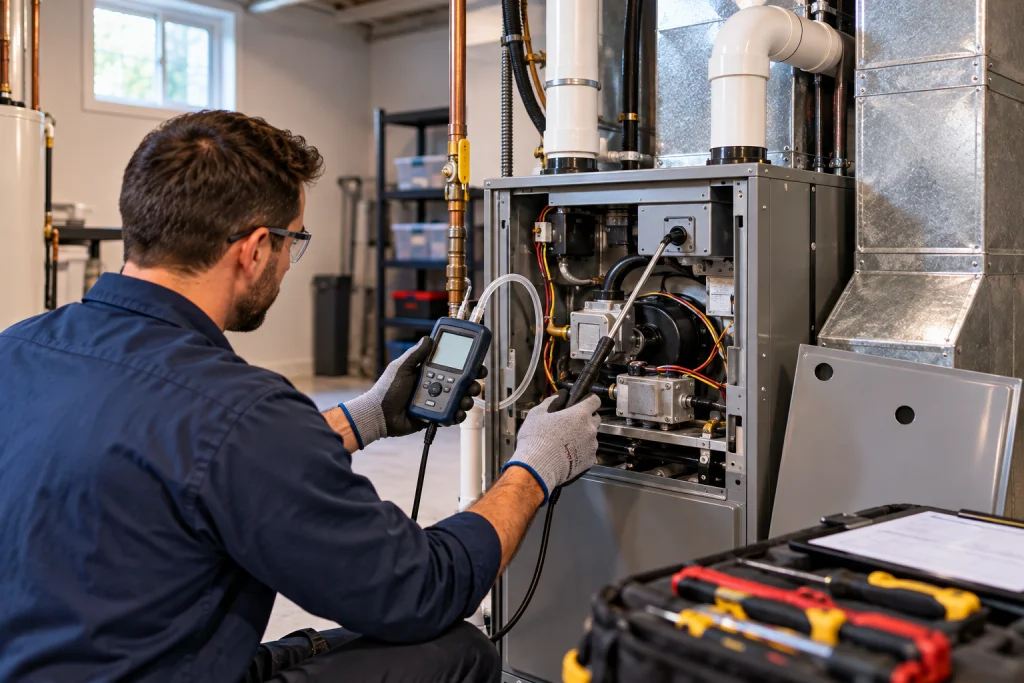
A real tune-up produces numbers, not just a nod. Carrier Canada lists 11 areas in a full tune-up, including combustion analysis, carbon monoxide testing and a ductwork check. Ask your technician to record these readings:
- Temperature rise: supply air minus return air, compared with the range on the furnace nameplate.
- Static pressure: how hard the blower pushes air through your ducts, compared with the nameplate maximum.
- Gas pressure: manifold pressure compared with the manufacturer’s specification.
- Flue gas carbon monoxide: measured in parts per million with a combustion analyzer.
- Safety controls: limit switch, flame sensor and pressure switches tested, not just looked at.
- Heat exchanger and burners: checked for cracks, rust and uneven flames.
Readings matter because a furnace can look clean and still run too hot or move too little air. A written report with before and after numbers also gives you proof of service if you ever file a warranty claim.
How to Tell a Real Tune-Up From a Quick Look
A tune-up that takes 15 minutes is a quick look, not a tune-up. Our visits run under two hours and end with a dated written report. Watch for these warning signs when you compare companies:
- Nobody shows you a carbon monoxide reading.
- Panels stay on, so the burners and blower get no real inspection.
- The price sits far below the usual $70 to $250 range, and the visit leans on upsells.
- You get a verbal summary but no written report.
- The company will not share its TSSA licence number for gas work.
A good company answers all of these questions before you book, and it quotes any extra repairs in writing before it touches them.
Want a tune-up that ends with real numbers?
Book licensed gas technicians and get a dated written report with every reading recorded.
Is a Furnace Tune-Up Worth It Every Year? How Often to Book
Once a year, in early fall. HRAI recommends booking before the heating season starts, and Carrier Canada also suggests a visit after a major repair or part replacement.
September and October are the quieter months for scheduling. November through February fills with emergency no-heat cal