

🔧 Heat Pump Repair
Heat Pump Repair: Symptoms, Safe Checks and Real Ontario Costs
Heat pump repair for homes in Halton, Hamilton and Brantford, including Oakville, Burlington, Milton, Ancaster, Dundas, Stoney Creek, Cambridge and Caistor Centre.
Heat pump repair starts with a diagnosis, not a guess. This page shows which symptoms you can check safely, which ones mean stop and call, and what repairs usually cost in Ontario. Then you can decide whether to book a visit.
25+ years of experience TSSA licensed & certified Serving Halton, Hamilton and Brantford
Quick Triage
Stop or check first?
Pick what you notice right now. Choose the closest match and we will tell you whether to stop, check first, or relax.
01
I smell burning, or see smoke or sparks
Turn the system off and call now. Switch it off at the thermostat and at the breaker. A burning smell or sparks needs a technician before the system runs again.
02
The outdoor unit is covered in ice that is not clearing
Leave the ice alone and call. Ice that stays after a defrost cycle points to a fault. Do not chip it off with tools.
03
The breaker keeps tripping
Do not reset the breaker again. One reset is fine. A breaker that trips again means a fault, so leave the system off and call.
04
I hear loud buzzing or clicking, or the fan runs with no heat
Switch the system off and call. Loud buzzing or clicking, or a fan that runs with no heat, can mean a failed electrical part or compressor. Running it can add damage.
05
The air is weak or cool, but the unit runs normally
Run the safe checks, then book. Confirm the thermostat mode, replace a dirty filter and clear the area around the outdoor unit. If the air is still weak or cool, book a visit.
06
It will not turn on at all
Check the thermostat and the breaker once. Confirm the thermostat is set to heat and has power. Reset the breaker once. If it still will not start, call us.
07
Steam rises from the outdoor unit and its fan stopped
This is probably normal defrost. Steam and a stopped outdoor fan are normal for a few minutes. Defrost usually lasts 5 to 15 minutes. If ice remains afterward, call us.
Symptoms
Which Heat Pump Repair Problem Do You Have?
Most calls start with one of these common symptoms. Match yours below to see the usual causes and the one safe step to try first.
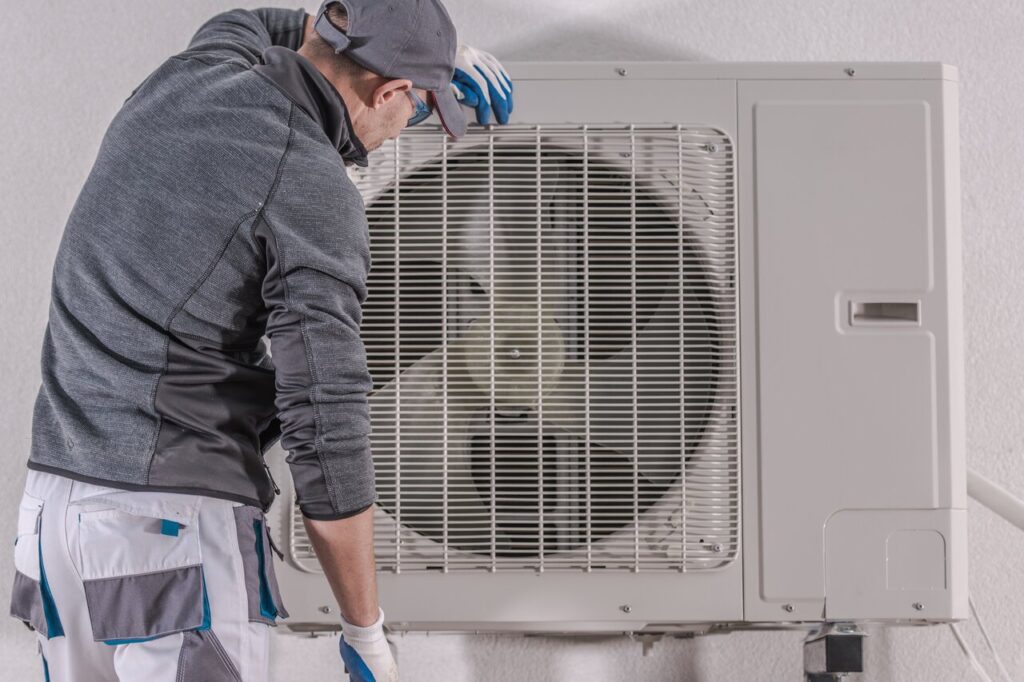
Not sure which one is yours? Call (905) 689-3777 and describe what you see.
Weak or no heat
Weak or No Heat
Weak heat often traces back to a dirty filter, the wrong thermostat mode or a blocked outdoor unit. Deeper causes include low refrigerant, a failed capacitor or a faulty reversing valve.
First, check the filter, the thermostat mode and the area around the outdoor unit. If the fan runs but the air stays cool, call us. Related reading: why a heat pump might blow only warm air.
Ice or frost
Ice or Frost on the Outdoor Unit
Light frost is normal in winter because the unit defrosts itself. Ice that stays after a defrost cycle points to a sensor or control fault, blocked coils or low refrigerant.
Gently clear loose snow and leaves, and never chip at the ice with a tool. If thick ice remains, turn the system off and call us.
Strange noises
Strange Noises
Rattling, squealing or grinding can mean a loose fan blade, worn motor bearings or debris near the unit. Loud buzzing, clicking or humming can point to an electrical or compressor fault.
Switch the system off if the noise is loud or new. Then call us, because running a failing part can cause more damage.
Won’t start
The Heat Pump Will Not Start
A unit that will not start may have a tripped breaker, dead thermostat batteries or a failed capacitor or contactor.
Check the thermostat first, then reset the breaker once. If it trips again, leave it off and call us.
Short cycling or high bills
Short Cycling or High Bills
A system that switches on and off often, or runs nonstop, can mean a thermostat fault, a refrigerant leak or a dirty coil. Auxiliary electric heat that runs a lot also pushes bills up.
Compare this month’s bill with the same month last year, and note when the unit runs. Then share both with the technician.
Water or leaks
Water or Leaks
Water near the indoor unit often means a blocked condensate drain. Meltwater at the outdoor unit after a defrost cycle is often normal.
Do not run the system if water reaches electrical parts. Call us if the leak keeps coming back.
Safety First
When to Stop and Call Right Away
Turn the system off and call if you notice any sign below. Running a damaged heat pump can turn a small repair into a large one.
01
Burning or electrical smell.
Switch the system off at the thermostat and the breaker, then call us.
02
Ice that does not clear.
Thick ice that stays after a defrost cycle points to a fault, so leave the ice alone and call.
03
A breaker that trips again.
One reset is fine. A second trip means something is drawing too much power.
04
Buzzing, clicking or a fan with no heat.
If the fan runs but the compressor never starts, the problem needs a technician.
05
No heat in a cold snap.
If overnight lows are well below freezing, call early, especially with young children, older adults or anyone with a health condition at home.
Everything else can usually wait for a booked visit. If you are unsure, call us and describe what you see, and we will tell you whether it can wait.
Safety limit. Do not remove electrical panels, handle refrigerant, or attempt electrical repairs yourself.
Seeing one of these signs? Call before you run the system again.
Before You Book
What to Check Safely Before You Book a Heat Pump Repair
Five quick checks can rule out simple causes, and none needs a tool.
1
Thermostat.
Confirm it is set to heat, the setpoint is above room temperature and the batteries are fresh.
2
Breaker.
Check the panel for a tripped breaker labelled heat pump or HVAC. Reset it once only.
3
Air filter.
A clogged filter restricts airflow and can trigger safety switches. Many filters need changing every one to three months.
4
Outdoor unit.
Gently clear snow, leaves and debris from around the unit, and keep the space around it open.
5
Sound and fan.
Note whether the outdoor fan runs and whether you hear clicking or buzzing. A technician will want to know.
Safety limit. Do not remove electrical panels, handle refrigerant, or attempt electrical repairs yourself. These checks need no tools, and anything beyond them is work for a licensed technician.
Then write down the model and serial number from the outdoor unit’s rating plate, any thermostat error code and when the problem started. Also take a photo of the outdoor unit. This speeds up the visit and any parts warranty check. Our list of heat pump warning signs explains the early signals that call for a visit.
Normal or Not
Normal Defrost or a Real Heat Pump Repair?
Steam from the outdoor unit and a brief pause in warm air are normal, but ice that stays is not.
Timing varies. Exact defrost timing varies by manufacturer and model; use your equipment manual as the final reference.
Normal defrost
- Steam or vapour rises from the outdoor unit as frost melts.
- The outdoor fan stops for a few minutes.
- A defrost cycle often lasts about 5 to 15 minutes, based on one manufacturer's guidance.
- The system may check for frost every 30 to 90 minutes while heating, depending on the model.
- Indoor air feels slightly cooler, and backup electric heat may switch on briefly.
A real fault
- Ice stays on the unit after the defrost cycle ends.
- Defrost runs much longer than your manual says, or repeats back to back.
- The unit defrosts constantly in mild weather.
- You smell burning during defrost.
- Likely causes include blocked coils, a faulty sensor or control, or low refrigerant.
Can you run a heat pump with ice on it? A thin layer that clears during a defrost cycle is fine. Thick ice that stays means turning the system off and calling us, and never chipping at it. When in doubt, take a photo, because ice that has not melted after a full cycle is worth a visit. This follows one manufacturer’s published defrost guidance.
Your Thermostat
What Emergency Heat Means for Your Bill
Emergency heat is a manual setting that heats with electric strips instead of the heat pump, so it can raise your bill quickly.
1
Emergency heat replaces the heat pump.
You choose it on the thermostat, and the electric strips do all the heating.
Auxiliary heat works with the heat pump.
It switches on automatically when the heat pump needs help.
3
Electric strips cost more to run.
They turn electricity into heat at about 100 percent efficiency, while a heat pump moves heat and delivers far more heat per unit of electricity.
Use emergency heat only as a short bridge while you wait for a repair, and never when you smell burning. If auxiliary heat runs for long stretches in mild weather, treat that as a fault. Not every system has this setting, so check your thermostat and manual, or ask us.
What To Expect
What a Heat Pump Repair Visit Includes
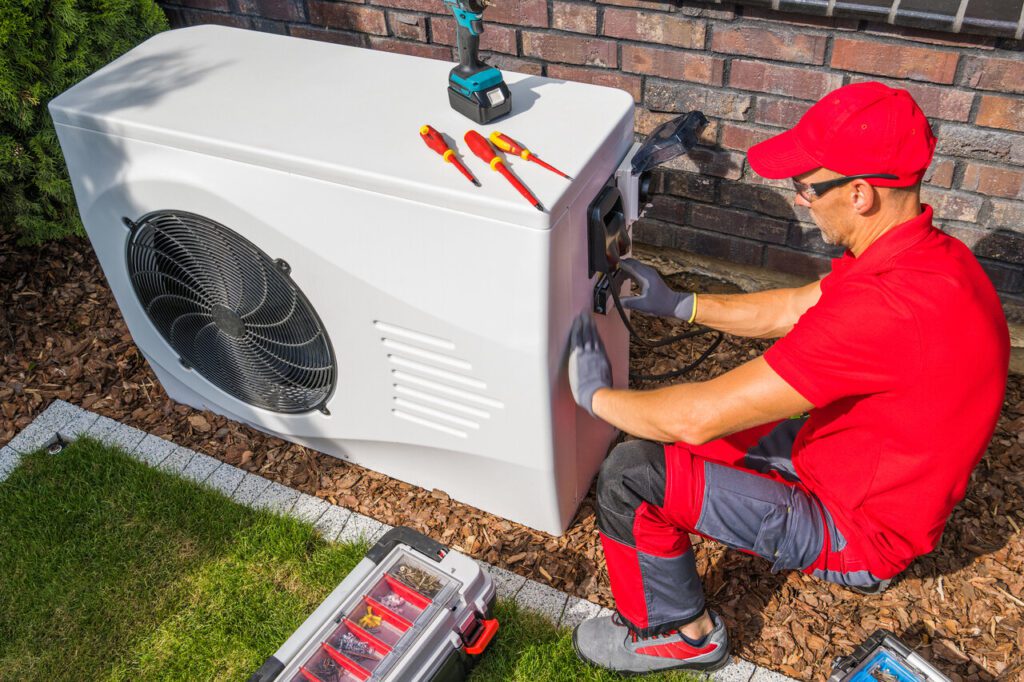
A good visit finds the cause before it replaces anything, and you hear the price before work starts.
1
Your description.
We start with what you saw, heard and smelled, plus the model and age of the system.
2
Inspection.
Next, the technician checks the outdoor unit, the indoor unit, the electrical connections and the thermostat.
3
Diagnosis.
Then they test the system to find the cause, instead of swapping parts to see what works.
4
A quote before work.
You hear the cause, the fix and the price before any repair starts.
5
The repair.
Once you approve, the technician fixes or replaces the failed part.
6
Performance check.
Finally, the system runs through heating or cooling to confirm it works as it should.
How long does a repair take? That depends on the fault and on whether the part is available, so a quick part swap takes less time than a repair that needs a part ordered. Ask for a time estimate when you get the quote. Also ask the technician to name the failed part and explain why it failed. That tells you whether the same fault could return.
On the Job
What Technicians Commonly Find During Heat Pump Repairs
These five faults sit behind many of the symptoms above. Each one shows what you may notice first, then what a technician checks before any part is replaced.
01
Failed capacitor
You may notice: The unit hums but the fan or compressor will not start, or it will not start at all.
The technician checks: It is tested against its rated value, and a weak one is replaced, which is usually a smaller repair than a motor.
02
Refrigerant leak
You may notice: Weak heat, ice on the coil or bills that creep up.
The technician checks: The leak has to be found and fixed first, because adding refrigerant without a repair only delays the same call.
03
Blocked outdoor coil
You may notice: Leaves, cottonwood, dirt or packed snow against the coil, and a unit that runs hard for little heat.
The technician checks: Airflow is checked and the coil is cleaned. Blocked airflow can also contribute to icing.
04
Faulty defrost sensor
You may notice: Ice that never clears, or a unit that defrosts far too often.
The technician checks: The sensor and control board are tested before refrigerant is blamed, so you do not pay for the wrong fix.
05
Reversing valve issue
You may notice: Cool air in heating mode, or the reverse.
The technician checks: A stuck valve is one of the larger repairs, so the fault is confirmed and you hear the quote before work starts.
Ask your technician to show you the failed part, or a photo of it, so you can see the fault yourself. That is the easiest way to know the repair matches the problem.
Pricing
What Does Heat Pump Repair Cost in Ontario?
One published GTA and Hamilton price table puts most repairs between about $100 and $1,500 or more, depending on the part that failed.
Typical Ontario heat pump repair costs
Market data by repair level, before any warranty credit.
Service call or inspection
$90 to $195
Minor repair: filter, thermostat calibration, sensor
$100 to $300
Moderate repair: capacitor, fan motor
$300 to $700
Major repair: compressor, refrigerant system, reversing valve
$700 to $1,500+
Source: HVAC Center Inc., heat pump repair pricing for the GTA and Hamilton, last reviewed October 7, 2026. These are one contractor’s published 2026 estimates, not a quote from us. Technician hourly rates in the same table run about $90 to $145.
What moves the price
Market data by repair level, before any warranty credit.
01
A capacitor costs far less than a compressor.
02
A parts warranty can reduce the parts cost, although labour may still apply.
03
A leak must be found and fixed before any recharge, which adds work.
04
Older models can mean harder-to-find parts.
Ask any contractor, including us, for the diagnostic fee and whether it is credited toward the repair before the visit.
When Is Heat Pump Repair Worth It?
Use the system’s age and the size of the repair to decide, and ask for the written quote before you commit.
1
Newer system, minor repair.
Repair is usually the sensible choice. A capacitor, sensor or thermostat fix on a system with plenty of life left rarely justifies replacement.
Older system, repeated repairs.
Compare replacement. When the same system needs another repair, the combined spend can approach the cost of a newer unit. Our repair versus replacement guide shows how to weigh it.
3
Compressor, refrigerant or reversing valve.
Get the full written quote before you decide. These are the largest repairs, so the answer depends on the quote, the age of the system and any warranty cover.
Before You Pay
Example: How Manufacturer Heat Pump Warranties Work
A parts warranty can cover a failed part, but it often does not cover the labour to fit it. The terms below are Lennox’s, shown as one example, and your own model’s warranty controls.
- Find the install date and model number on the rating plate or in your paperwork.
- Extended coverage can depend on registering the system, and Lennox sets a 60 day window after installation.
- Tiers differ by model, and Lennox's published terms list 5 or 10 years on the compressor and on other covered parts.
- The basic limited warranty in those terms includes no labour, and labour cover is a separate add-on.
So a covered part can still leave a labour bill, and that changes what a repair costs you. Before you pay, ask for the warranty status in writing. Also ask any contractor, including us, how long repair labour is covered. These figures come from Lennox’s published warranty terms. Other brands differ, so the warranty paperwork for your own model controls.
Urgent Problems
Heat Pump Emergency Repair: What to Do While You Wait
If your heat pump fails in a cold snap, call (905) 689-3777 and describe what is happening.
What counts as an urgent heat pump repair
- No heat when it is below freezing outside.
- A burning smell, smoke or sparks
- Ice that will not clear on a system that has stopped heating.
- A breaker that keeps tripping.
While you wait
While you wait, set the thermostat to heat and close doors to the rooms you use least. Use emergency heat only if there is no burning smell. If you smell burning, turn the system off at the breaker.
Next Step
Repair or Replace? Where to Go Next
If the repair quote is large or the system is old, replacement may be the better move, and that decision has its own guide.
See how we weigh repair against replacement. A replacement is sized with a CSA F280 load calculation, so the new unit fits your home instead of copying the old one.
Repair or replace?
Two quick answers
Based on two things — how old is your heat pump? (under 8 years, 8 to 12 years, or over 12 years) and how many repairs in the last 2 years? (this is the first, one earlier repair, or two or more earlier repairs):
- Repair usually makes sense. A repair is usually the better first move. Book a diagnosis so you see the actual fault and a written quote before deciding anything else.
- Get the quote, then compare. Ask for the repair quote before you approve any work. Weigh that quote against a replacement. A diagnosis does not commit you to either one.
- Look at replacement too. Repeated repairs on an older system tend to add up. Get the diagnosis, then compare the repair quote with replacement before you spend more on this unit.
Heat Pump Repair Across Halton, Hamilton & Brantford
We repair heat pumps in Oakville, Burlington, Milton, Hamilton, Ancaster, Dundas, Stoney Creek, Brantford, Cambridge and Caistor Centre.
Not sure we cover your street? Call (905) 689-3777 and we will confirm.

Why Call Us
Licensed Technicians Who Explain the Fix First
Our team has 25+ years of experience with heating and cooling in Halton, Hamilton and Brantford. Learn more about our team, or read what customers say on our reviews page.
- 25+ years of experience
- TSSA License #000198117
- Diagnosis explained before any repair starts
Related Services
Heat Pump Repair and Related Services
Heat Pump Replacement
For a system that is aging, failing or costing more to fix than it is worth.
Heat Pump Installation
Sizing, system types and what a new installation includes.
Heat Pump Maintenance
Routine care that helps you avoid the next breakdown.
Heat Pump Services
The full list of what we install, repair and maintain.
Ready to get your heat pump looked at?
Talk to a technician, describe the symptom and book the visit.